Everything that ever blooms
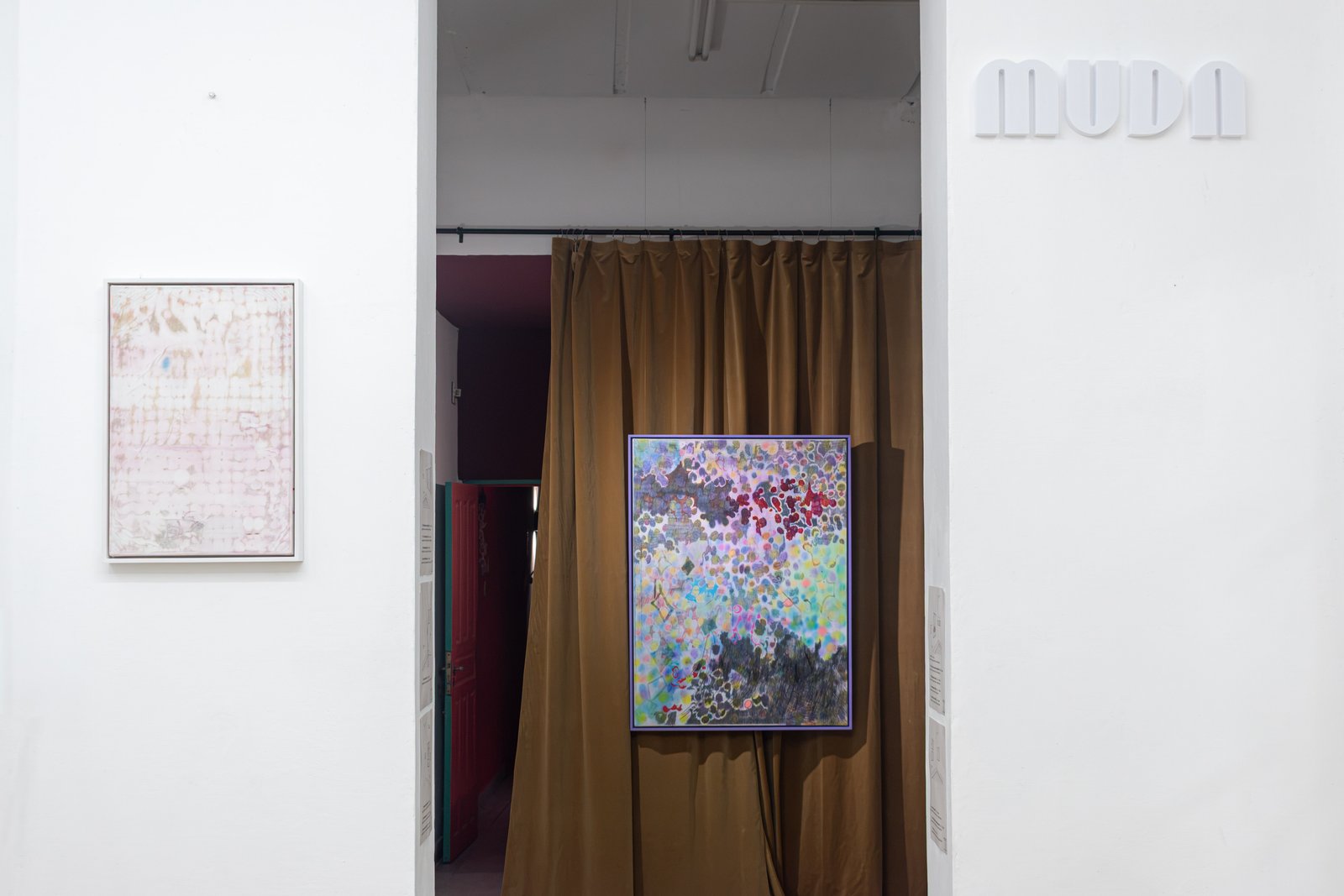
Galery MUDA, Goya, Corrientes. Curation by Robin Baena
What does it mean to create an image from a sensation?
The question seems to lead toward the realm of feeling, emotion, subjective experience—something that would find in the visual work a form of expression. But Catalina White’s practice seems to move away from that place. Where one might expect an interiority poured onto the surface, something else appears: an action that seeks to make sensible forces that do not, in themselves, possess a visible form.
The nature does ⋆𐙚₊˚ While A force cannot be seen ˚ʚ♡ɞ˚ It is felt when it acts upon a body.
Humidity, erosion, pressure, expansion, movement, stillness: these are not necessarily forms that can be reproduced, but intensities that affect. The mark—and with it, color—begins precisely where representation ceases to be sufficient.
Catalina observes nature and, through that observation, produces an image of the external world. She produces an affect. Something that takes place between that which is contemplated and the body that contemplates. Something metaphysical that is received, passed through, transformed. Then it begins to become visible.
Her work can therefore be understood as a translation, though not a translation between two equivalent images. There is no original nature that must find its copy on the canvas. There is no model and no representation. What exists is an original sensory experience seeking to constitute itself within another mode of existence: that of the materiality of drawing and painting.
˚₊‧꒰ა ☆ ໒꒱ ‧₊˚ The work does not reproduce a sensation ⭑。𖦹°‧ It produces it ⭑。𖦹°‧
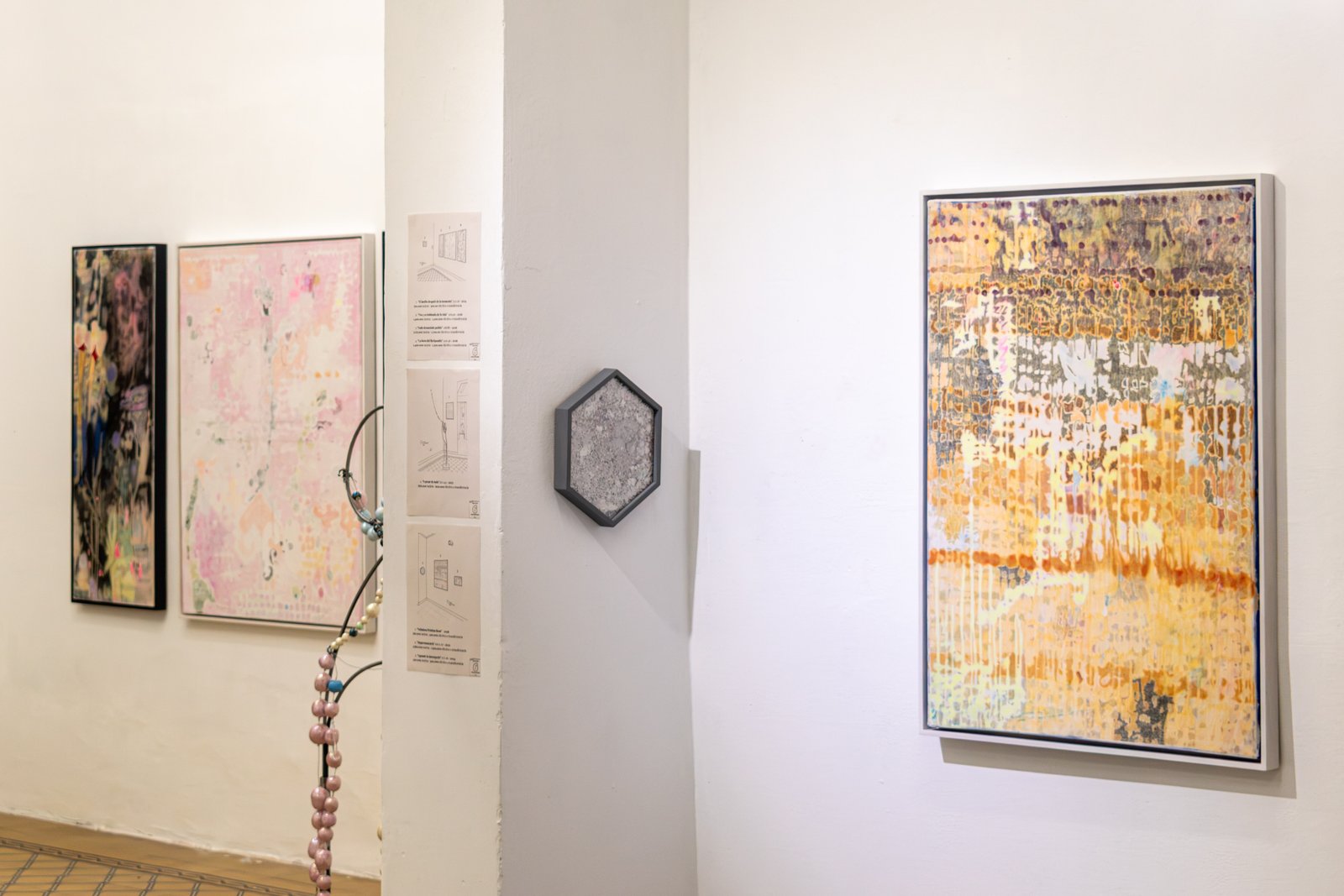
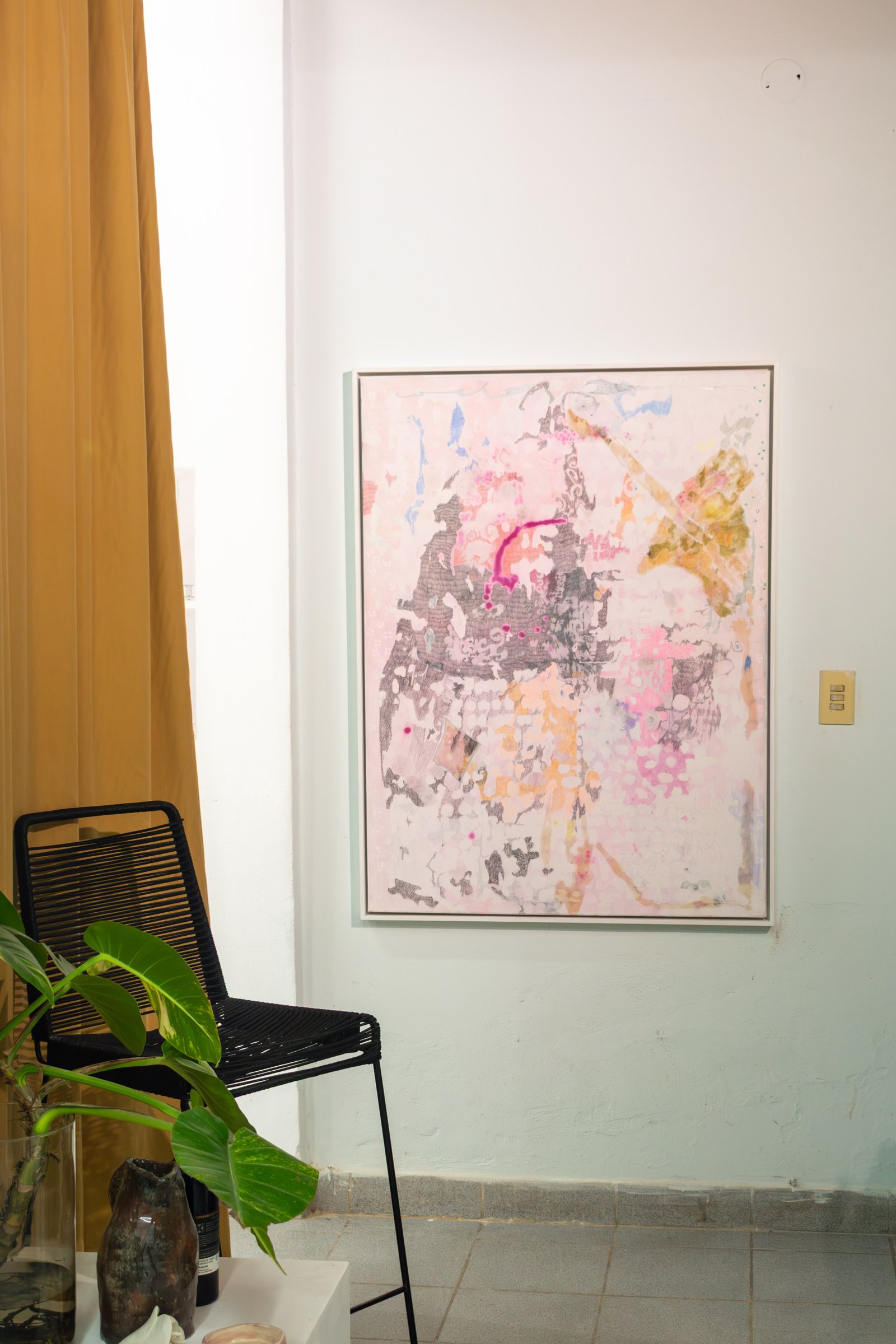
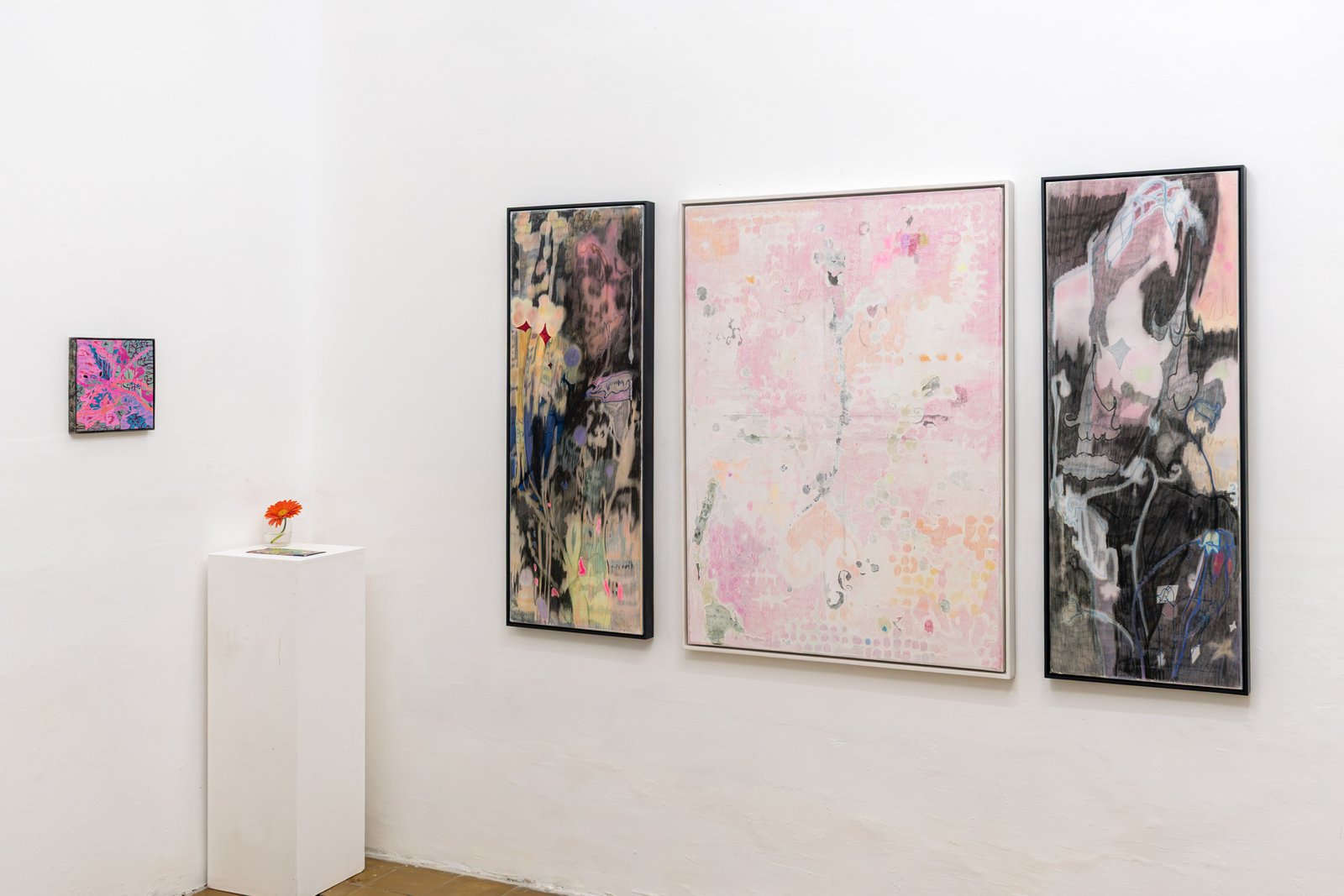
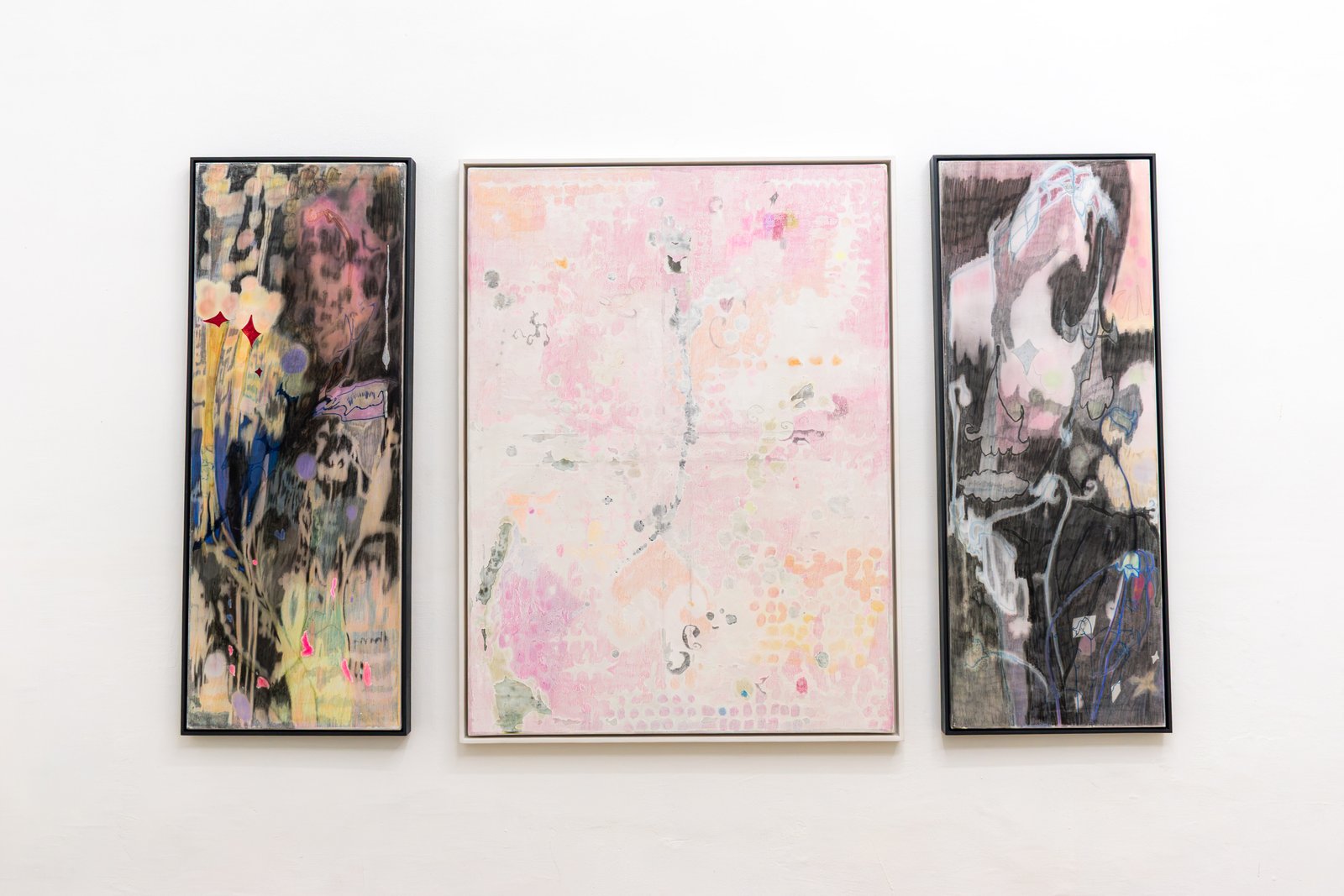
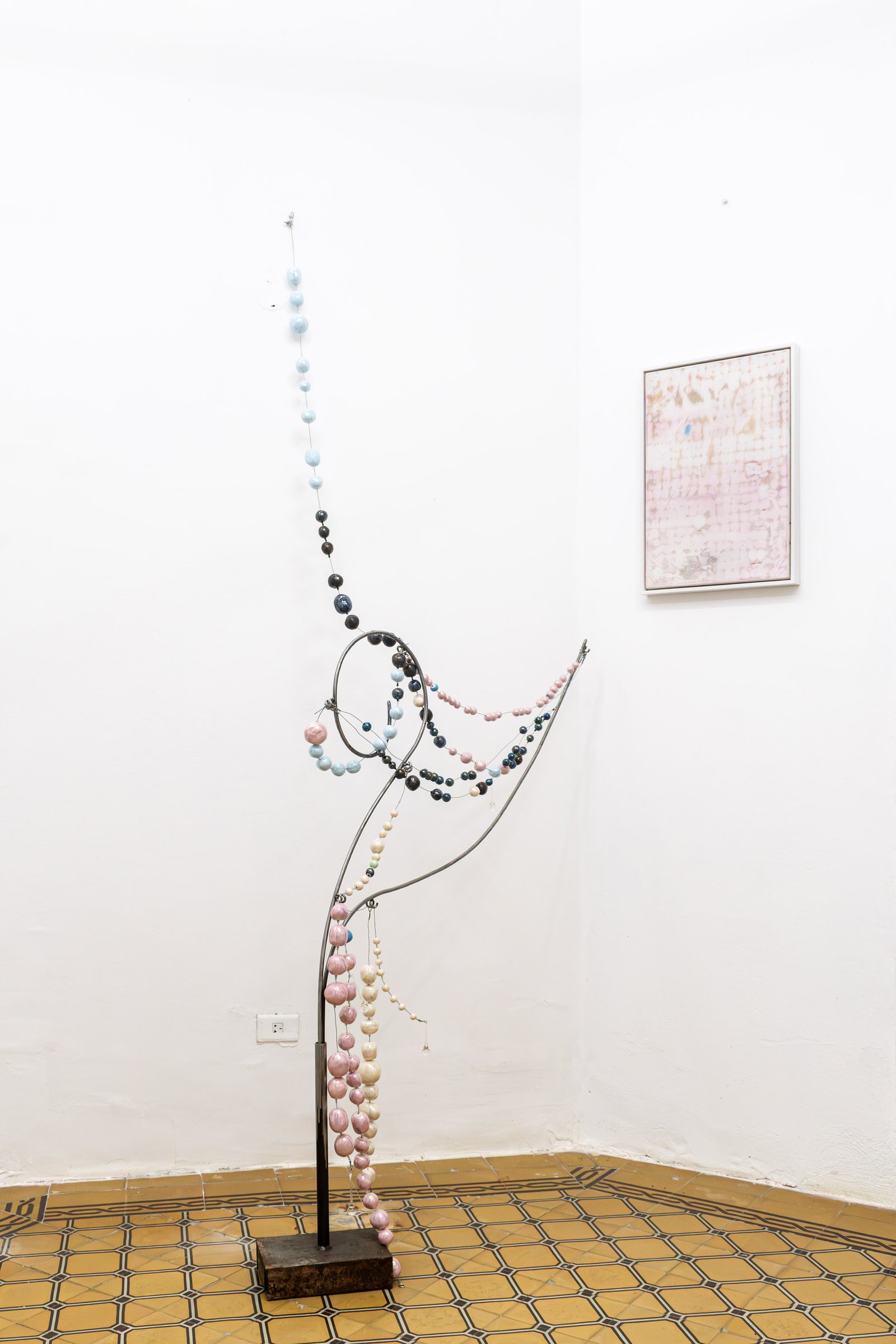
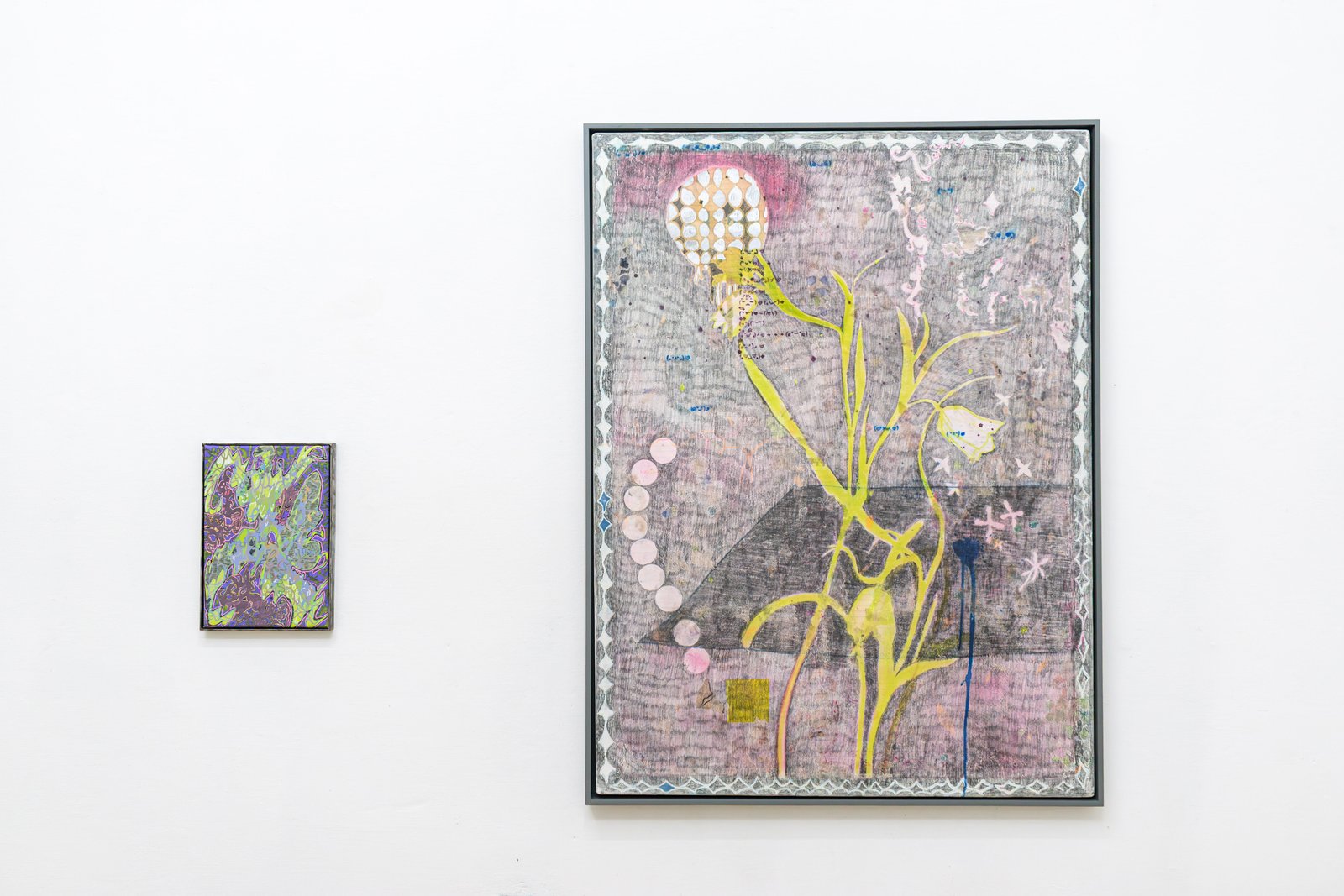
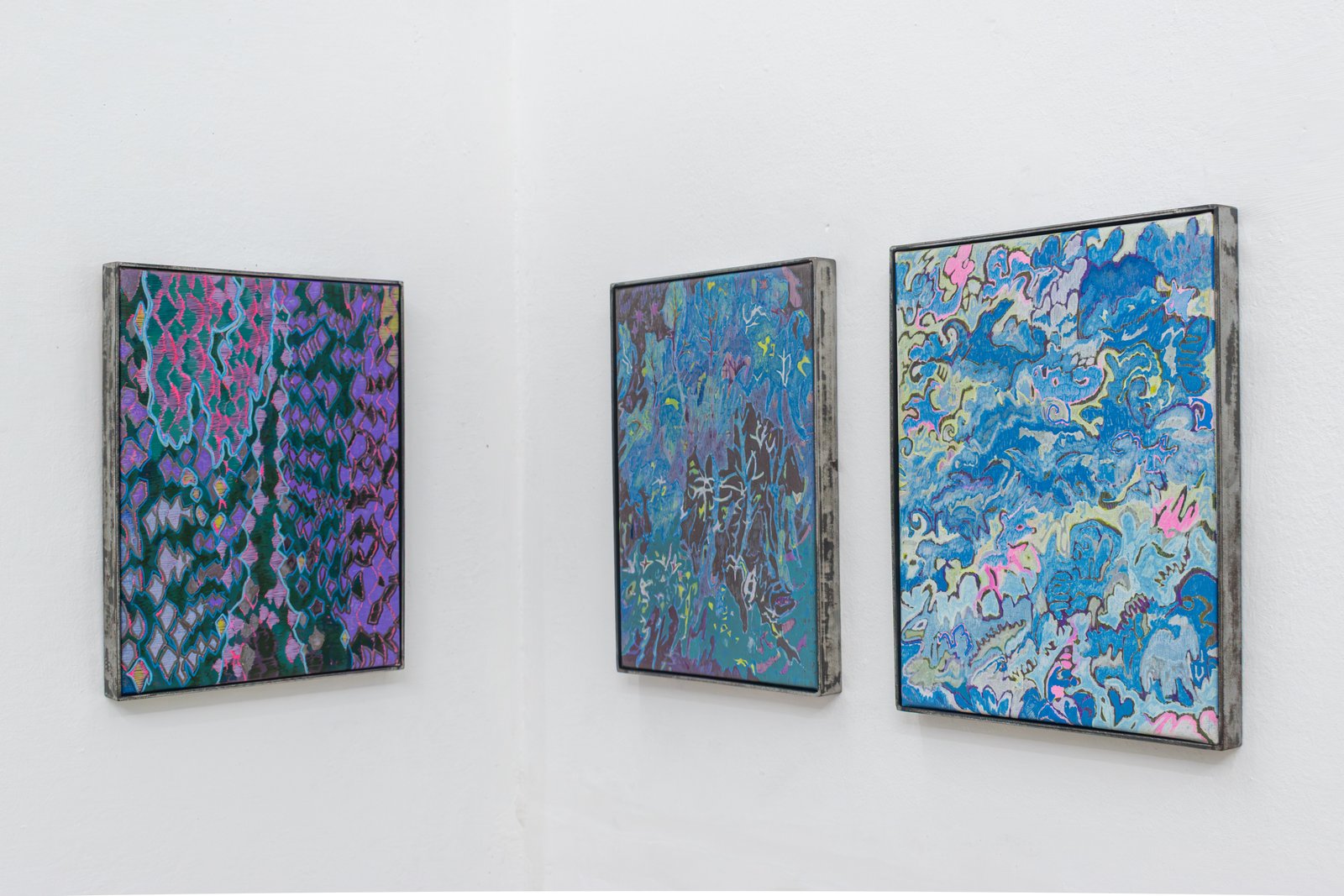
This distinction is where much of the power of her work resides. Sensation is not here a hidden content behind the image, something the work should communicate or explain. It is what takes place on the surface itself. A transparency, a line, an accumulation of matter, a flaking area, one color invading another, overlapping surfaces and textures construct a palimpsest of force: an intensity made visible.
                                                                                                                                                                                                 A painted whole
       ໒꒰ྀི๑• ༝ •๑꒱ྀི১ **therefore frees itself from the obligation to resemble something** ໒꒰ྀི๑• ༝ •๑꒱ྀི১
There can be nature without landscape. There can be movement without a moving figure. There can be humidity without water, erosion without rock, depth without perspective.
The image is an event that unfolds through encounters: one layer over another, over another new layer. Each intervention alters the compositional field that came before it. A line is covered; a color re-emerges; a form is hinted at and then dissolves.
                  **The surface is never neutral** 𓏲𝄢
                                                                                                                                                                                                         𓏲𝄢 **It is traversed by time**
Each layer preserves something of those that came before, even when it conceals them. What disappears from visibility does not necessarily disappear from the pictorial state. It remains as pressure, as shadow, as residue, as the possibility of return. The past persists within the present as transitory states. A form is always on the verge of becoming something else.
Perhaps this is why her works resist an interpretation that seeks to ask what they “represent.” That question assumes that behind the image there exists an identity that must be recovered: a thing, a symbol, an ultimate meaning.
It is precisely a presence that does not need to become recognizable in order to exist.
The surface is the place where something happens. Sensation has its own consistency. It is a truth made of intensity, affect, presence.
Catalina White’s visual practice, then, does not seek to capture the world, but to place it in a state of sensation.
                                                                                                                                                                                                                                                                     **She does not create images of the visible**


                                                                                ˗ˏˋ ★ ˎˊ˗ **She insists on making it sensible**
Frida Jazmin Vigliecca